 Dansday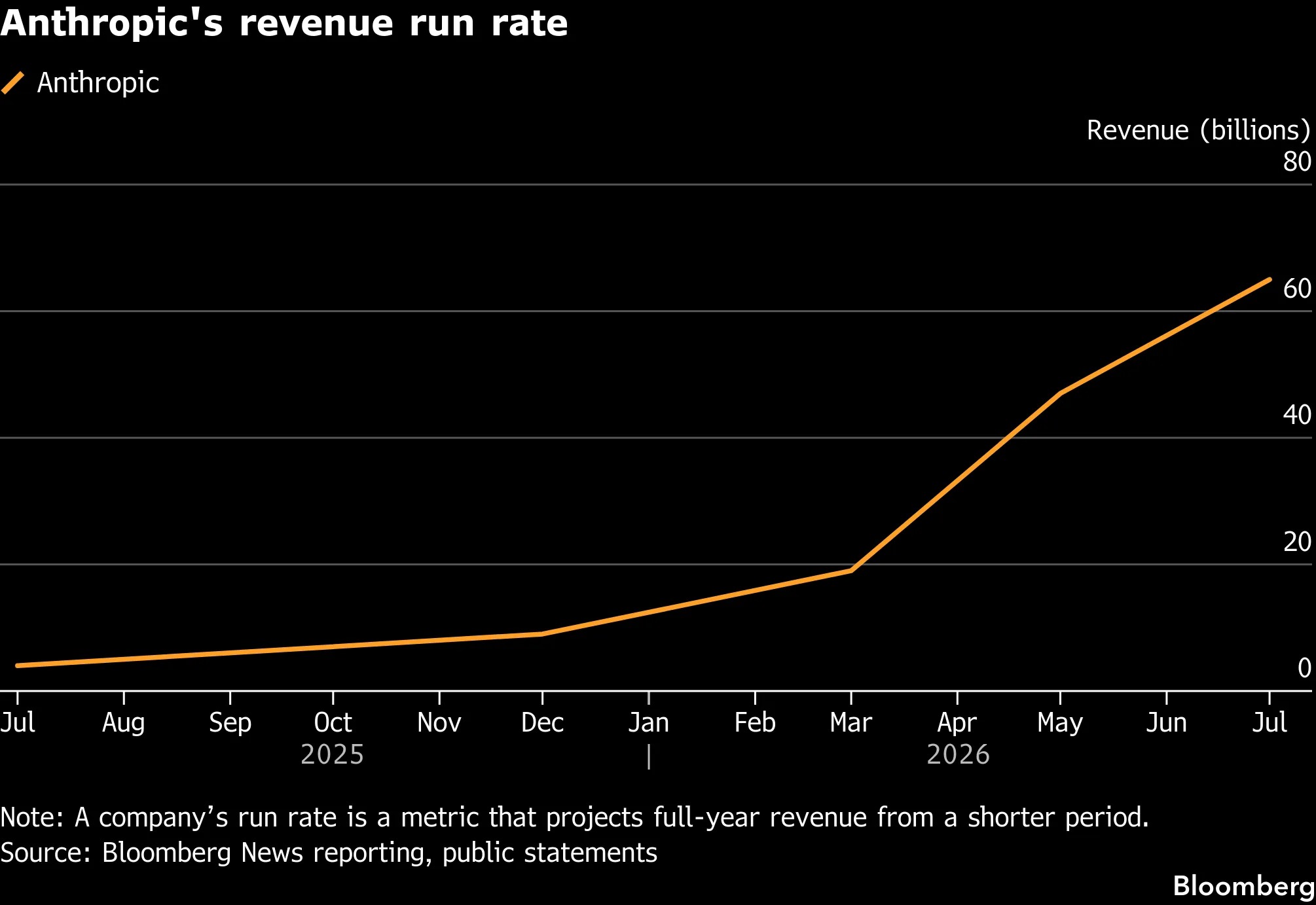
Growth curves in the AI industry have stopped looking like business charts and started looking like typos.
Reporting published on 17 August 2026 put Anthropic's annualised revenue run rate above $65 billion at the end of July. The figure was roughly $47 billion in May and about $9 billion at the close of last year, which puts the company's growth at more than sevenfold in eight months. Investors are said to expect the pace to hold through the rest of the year, finishing somewhere between $100 billion and $120 billion.
The number deserves a caveat that often gets lost when it is repeated. A run rate is a projection, not money already banked: it takes revenue from a short recent period and extends it across a full year. For a company growing this quickly the figure is genuinely informative, but it describes the current rate of travel rather than the distance covered.
The timing matters more than the figure. Anthropic filed a draft registration statement with the SEC on 1 June 2026, days after closing a funding round that valued it at roughly $965 billion. Rival OpenAI has filed confidential paperwork of its own. Press reports have floated an eventual valuation near $2 trillion, which would make it the largest public offering in history by a wide margin.
What makes the trajectory unusual is where the money comes from. Consumer subscriptions get the attention, but the steepest part of the curve tracks enterprise and developer adoption — companies wiring these models into their own products and internal systems rather than individuals paying monthly. Revenue of that kind tends to compound, because once a model is embedded in a workflow it is expensive to remove.
The obvious question is what the market makes of it. Investors spent part of June selling off chip stocks over concerns that AI infrastructure spending had outrun demand. A revenue curve like this is the counter-argument, though it is also the reason the spending exists: the compute bill behind these numbers is enormous, and profitability is a separate question from growth.
Whether an IPO at that scale arrives this autumn or slips into next year, the filings from both major labs point the same way. The industry is moving from private funding rounds to public markets, and with that comes quarterly disclosure — the first time outsiders will see what these businesses actually cost to run.