 Dansday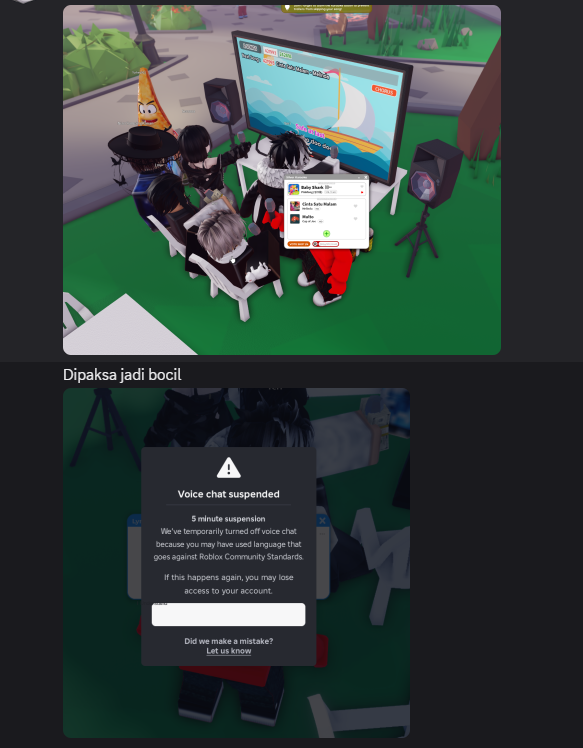
I found myself back on Roblox the other night, not for any serious development research, but to hang out with a friend in a karaoke game. We ended up in a place called Dan's Karaoke, and it was exactly the kind of chaotic, low-stakes fun that I think people miss about the early internet. The song choices were all over the place. One minute we were trying to find the beat for "Baby Shark," and the next we were butchering a song called "Multo" that neither of us had ever heard.
It was awkward, we were laughing the whole time, and it got me thinking from a builder's perspective. Why is an experience like this so sticky? There are no high-fidelity graphics, no complex game mechanics. It's just a virtual room, a catalog of song IDs, and a shared social space. And yet, it works beautifully.
It’s a powerful reminder that the core of so many successful products isn’t about technological complexity, but about facilitating human connection. The game itself is just a medium. The real product is the shared experience, the in-jokes, and the memories you create. Someone, a developer likely not much different from me, built a simple stage and a song queue system, and in doing so, created a venue for thousands of people to just have fun together.
Experiences like this are a great reset. They pull you out of the weeds of feature lists and performance metrics and remind you of the "why." We build things for people. Sometimes the most effective way to do that is to create the simplest possible tool that lets them be creative and social. The karaoke game didn't need a perfect pitch detection algorithm or a licensed music library; it just needed to give us a reason to laugh at our own terrible singing. It’s a lesson I try to carry into my own projects: focus on the core human interaction first, and the rest will follow.