 Dansday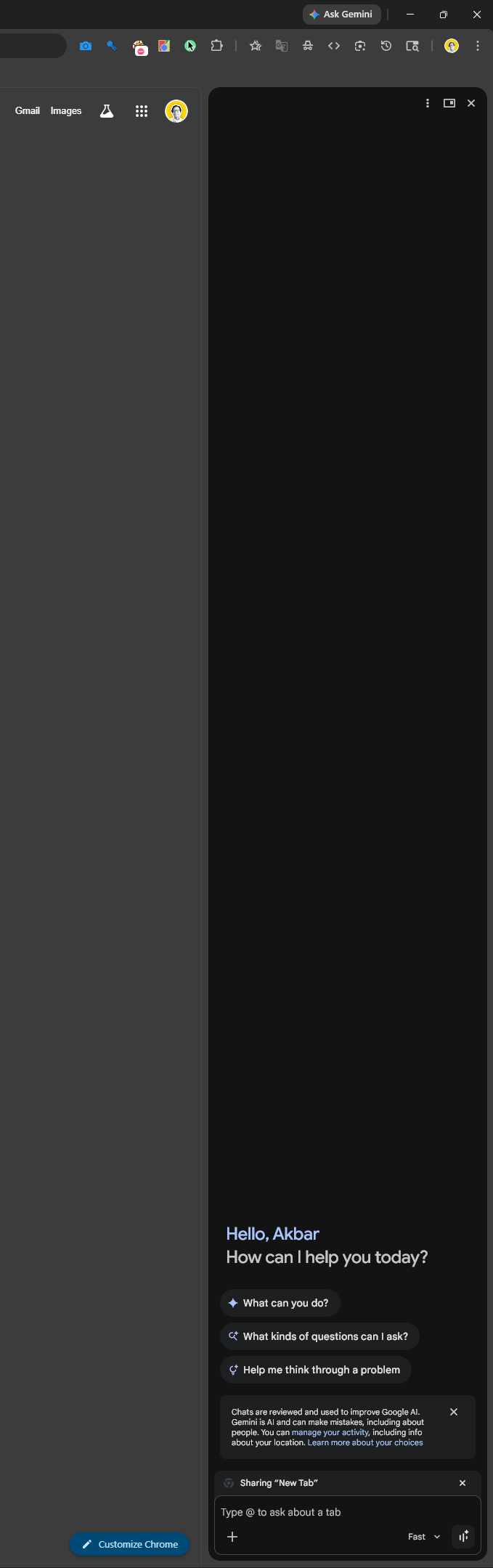
I was typing in my Chrome omnibox the other day and saw a new icon pop up: Gemini. It wasn't just a bookmark or an extension, it was integrated right there. My first thought was, "Well, that's it. This is the new standard." For a while now, we've been using AI tools by opening a new tab, copying and pasting context, and hoping for the best. That era is officially over.
This isn't just about having a chatbot handy. The real game-changer is that Gemini in Chrome has context. It can access the content of the current tab you're on. Think about what that means. No more manually summarizing an article or copying a block of code to ask a question about it. The browser itself is now an active participant in your workflow, capable of understanding what you're looking at and helping you with it directly.
For years, browser innovation felt like it was hitting a plateau. We got faster rendering, better tab management, and more robust security, all of which are great, but they are iterative improvements. This feels different. It's a fundamental shift in what a browser *is*. It's moving from a simple content renderer to an intelligent partner. Any browser without this level of deeply integrated, contextual AI is going to feel ancient very, very soon.
As someone who builds things for the web, this immediately gets my gears turning. It's a powerful research tool. I can be on a documentation page, highlight a function, and ask Gemini to explain it or provide an example without ever leaving the page. It streamlines the process of learning and debugging. It also makes you think about the user experience. If a user can just ask the browser to summarize your landing page, is your key message clear enough? If they can ask it to explain a complex feature, is your own in-app guidance good enough?
This is more than just a cool feature. It's a signal of where the entire industry is heading. The friction between gathering information and using that information is being systematically eliminated by putting AI at the point of interaction. Having it right in the browser is the most logical place for it to live, and I'm convinced this is now the baseline for what we should expect from our primary tool for accessing the internet.