 Dansday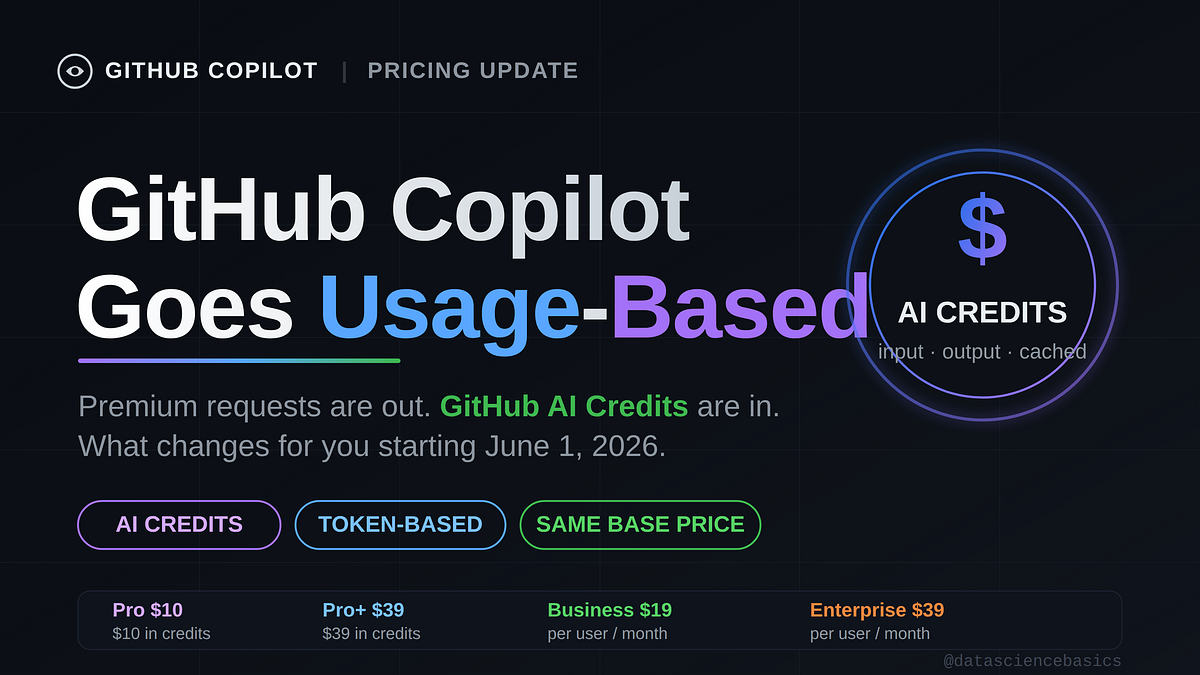
GitHub's AI coding assistant Copilot faced criticism from developers after the company introduced changes that move parts of its pricing model toward token-based billing.
The change sparked debate among developers who rely on AI tools for daily programming tasks. Many users expressed concerns that token-based pricing could make AI-assisted development less predictable, especially for engineers working on large codebases or complex projects.
GitHub Copilot has become one of the most widely used AI programming assistants, helping developers generate code, explain functions, write tests, and debug software. However, as AI models become more capable, operating costs have also increased, forcing companies to reconsider how these services are priced.
Supporters of usage-based pricing argue that it better reflects the actual computing resources consumed by advanced AI models. Similar models are already common across cloud platforms, where customers pay based on resources such as storage, bandwidth, and API usage.
Critics, however, argue that developers need predictable costs when AI tools become integrated into everyday workflows. If pricing becomes too complicated, companies may hesitate to adopt AI assistants broadly or limit usage among engineering teams.
The controversy highlights a larger challenge facing the AI software industry: balancing accessibility with the high cost of running advanced AI systems. As AI coding tools become more powerful, companies must find pricing models that support both sustainable infrastructure and developer adoption.
Beyond GitHub Copilot, the discussion reflects a wider shift in software development. AI assistants are moving from optional productivity tools into essential parts of engineering workflows, making pricing, reliability, and transparency increasingly important factors.
The future of AI-assisted programming will not only depend on better models and features. It will also depend on whether developers feel these tools remain affordable and practical for everyday use.