 Dansday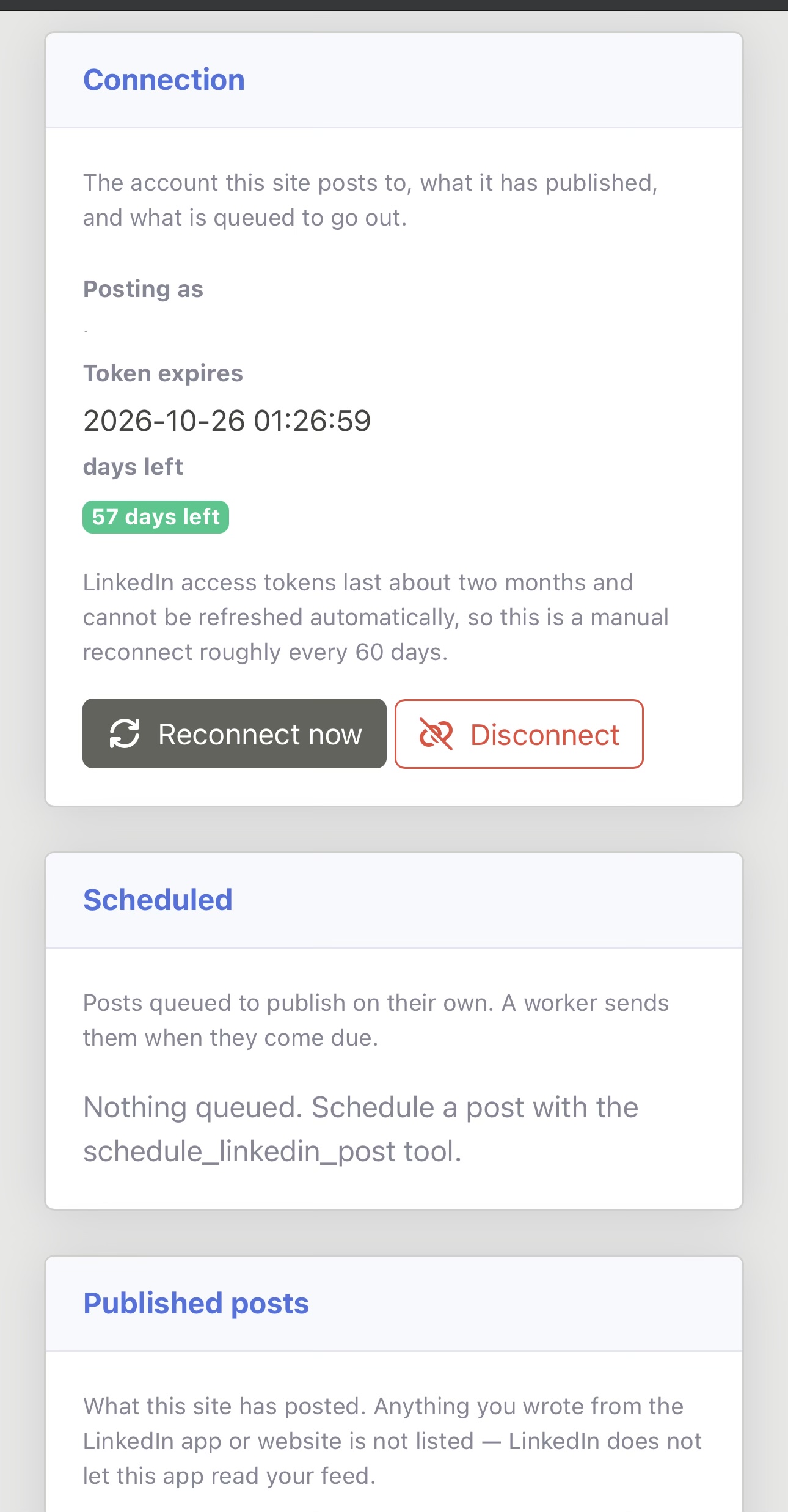
Most content management systems are built for humans. The interesting question is what changes when they are built for something else.
Over the past week the admin panel behind this site gained a Model Context Protocol (MCP) server — a single endpoint that lets an AI assistant read and write the site directly. The idea started small: stop copying drafts into a text editor and let the assistant publish them itself. It ended up as 47 tools covering articles, projects, categories, the about page and the section toggles that show or hide whole blocks of the site.
Everything an editor can do in the panel, the endpoint can now do over a token. Articles are written as HTML, publication dates can be backdated, and every write keeps the semantic search index in sync so the site's terminal page never answers from stale content. A separate upload endpoint handles the parts a JSON tool call cannot carry — images, documents and video — with the file type decided by inspecting the file itself rather than trusting its name.
The more unusual half of the work was LinkedIn. The same assistant can now publish to a personal feed with a single image, a swipeable set of up to twenty, a PDF or slide deck rendered as a carousel, or a native video. It can edit the text of a live post, delete one, comment, reply, react, and queue a post to publish on its own hours later while a background worker waits for it to come due.
Two constraints shaped that build more than any design decision. The first is that LinkedIn suppresses reach on posts carrying an outbound link. This is the reason experienced posters write "link in comments" rather than pasting a URL into the body. Rather than work around it informally, the tool makes it an explicit setting: the link can sit in the post, appear as a proper preview card with its own title and thumbnail, or be dropped into the first comment a moment after publishing.
The second is stranger. For a personal account, LinkedIn's API is effectively a one-way mirror. It will let an application create, edit and delete its own posts and comments, but it will never let that application read the feed back. Permission to look is gated behind an approval process that is not open to individual developers. The practical consequence is that the server has to keep its own record of everything it publishes — without it, the tool would have no way of knowing what it had already said.
Neither constraint is a bug, and both are worth understanding before building anything against a social platform. Write access is usually the easy part. Read access, and the memory that depends on it, is where the real limits show up. The whole thing is open source under an MIT licence, and the panel now carries a page showing which account is connected, when its token expires, and everything that has gone out.