 Dansday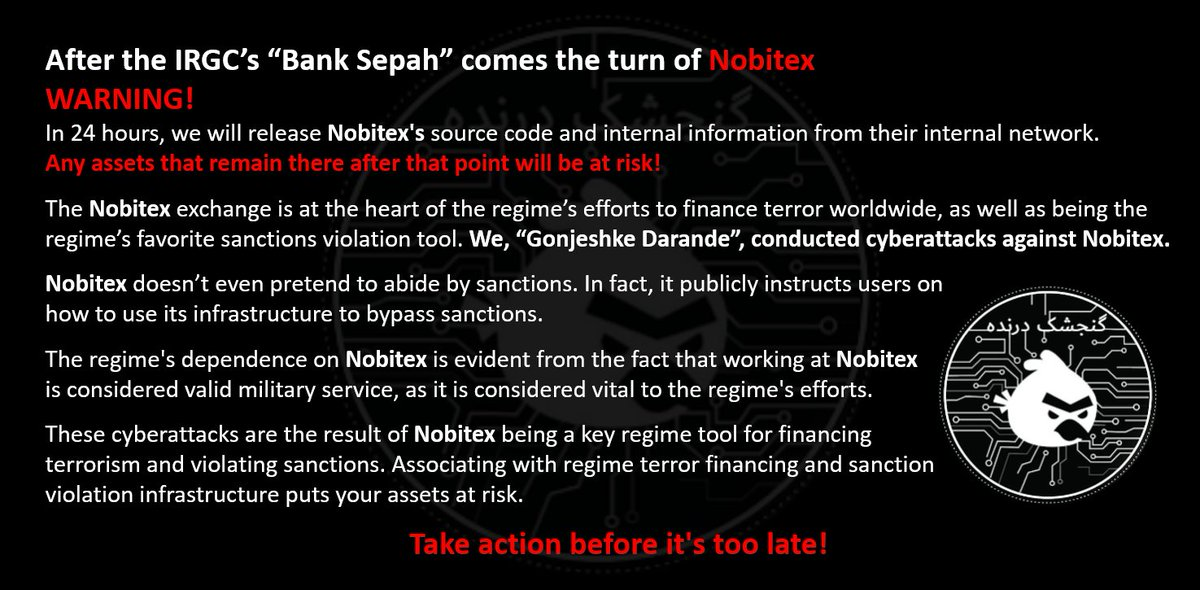
Iran's largest cryptocurrency exchange, Nobitex, has resumed services after suffering one of the country's most significant crypto-related cyberattacks. The incident has renewed discussions about cybersecurity, sanctions, and the role of digital assets in politically sensitive regions.
The attack, which occurred earlier in the week, was claimed by the pro-Israel hacker group Predatory Sparrow (Gonjeshke Darande). According to blockchain analysis and company statements, attackers drained millions of dollars in digital assets from the exchange by transferring funds to wallet addresses that were effectively unusable, suggesting the primary goal was disruption rather than financial gain. (Reuters)
Following the breach, Nobitex temporarily suspended operations while investigating the attack and strengthening its infrastructure. On 22 June 2026, the company announced that wallet access and trading services were gradually being restored after additional security measures were implemented.
The incident highlights how cryptocurrency platforms have become attractive targets not only for financially motivated hackers but also for groups pursuing geopolitical objectives. Unlike many previous exchange hacks that sought to steal and cash out digital assets, this attack appeared designed to damage confidence in a critical financial platform.
For the broader crypto industry, the Nobitex breach serves as another reminder that security remains one of the sector's greatest challenges. Exchanges continue investing heavily in cold storage, multi-signature wallets, real-time monitoring, and incident response systems, yet they remain high-value targets due to the large volumes of digital assets they manage.
The attack also illustrates the growing intersection between cybersecurity and international politics. As cryptocurrencies become more integrated into global finance, exchanges operating in sanctioned or politically sensitive regions may face additional risks beyond traditional cybercrime.
Despite the disruption, blockchain networks themselves continued operating normally. The incident reinforces an important distinction within the crypto ecosystem: while blockchain technology is decentralized, centralized exchanges remain vulnerable to operational and security threats.
As digital assets become increasingly mainstream, maintaining strong security practices will remain essential for exchanges seeking to earn user trust and protect customer funds.