 Dansday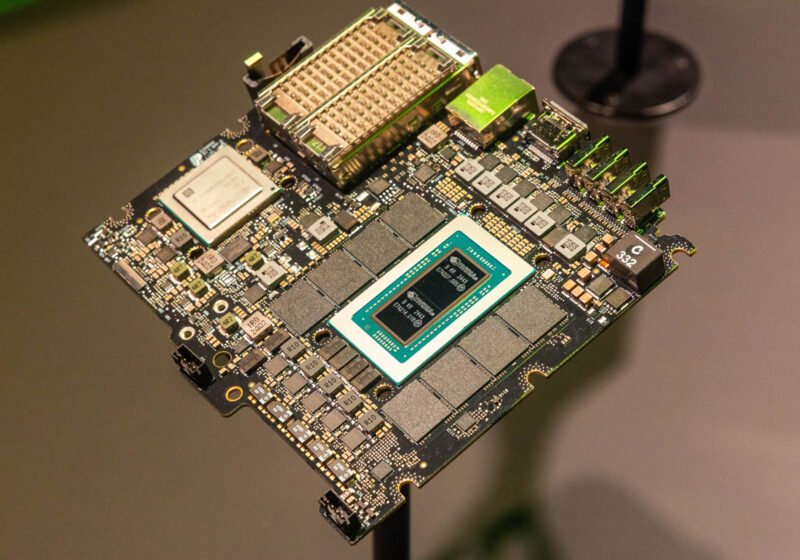
NVIDIA is taking artificial intelligence beyond cloud data centers and bringing AI processing directly to personal computers with its new RTX Spark platform.
At Computex 2026 in Taiwan, NVIDIA CEO Jensen Huang introduced RTX Spark, an AI-focused chip designed to allow laptops and compact desktops to run advanced AI workloads locally. The announcement represents NVIDIA's effort to expand from being primarily an AI infrastructure provider into the personal computing market.
The new platform is designed around the growing demand for AI agents—software systems capable of completing tasks, analyzing information, and assisting users with minimal manual input. Instead of sending every request to remote servers, future PCs equipped with RTX Spark could process certain AI workloads directly on the device.
NVIDIA developed RTX Spark alongside Microsoft and MediaTek, with plans for the technology to appear in future computers from major manufacturers including Dell, HP, Lenovo, ASUS, and Microsoft. The company expects the first devices powered by the platform to arrive later in 2026.
The move reflects a broader shift in the technology industry. For years, the AI boom has been driven by massive data centers filled with thousands of GPUs. However, as AI becomes part of everyday applications, companies are increasingly looking for ways to bring AI capabilities closer to users.
Local AI processing offers several advantages. Users can experience faster responses, improved privacy, and reduced dependence on internet connections. Developers can also build applications that take advantage of AI features directly inside personal devices.
The announcement highlights a new competition in the PC industry. Companies are no longer only competing on processor speed or battery life; they are now racing to create computers that can understand users, automate tasks, and run intelligent applications.
For NVIDIA, RTX Spark represents a strategic expansion beyond its traditional data center business. The company has become one of the biggest winners of the AI infrastructure boom, but the next opportunity may come from putting AI capabilities into millions of everyday computers.
As artificial intelligence becomes a standard feature of modern devices, the future of personal computing may depend on hardware that can deliver powerful AI experiences locally, without relying entirely on the cloud.