 Dansday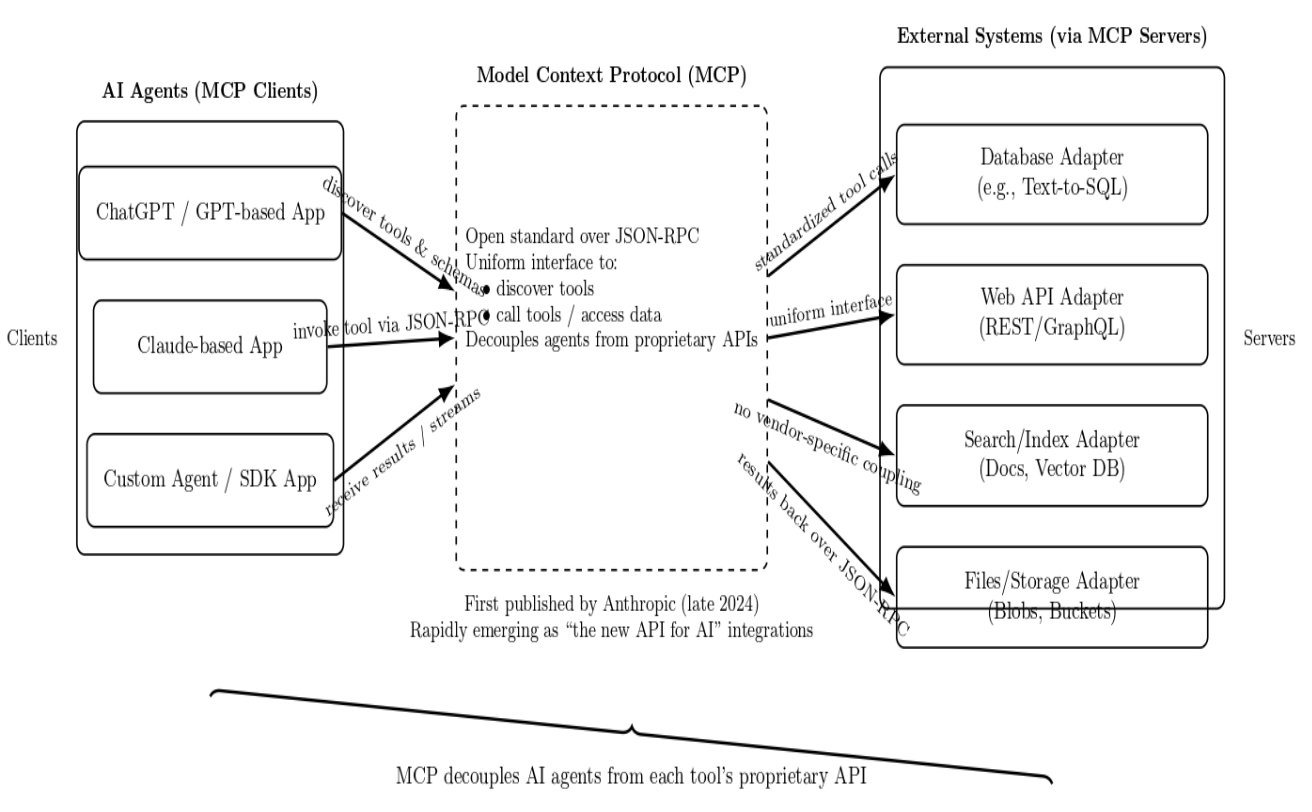
The artificial intelligence ecosystem is steadily converging on a common way for AI models to connect with external tools and data. On 21 June 2026, industry discussions intensified around the rapid adoption of the Model Context Protocol (MCP), an open standard that is becoming a key building block for AI applications.
Originally introduced by Anthropic and now supported by a growing number of companies—including OpenAI, Microsoft, GitHub, and developer tool providers—MCP allows AI assistants to securely communicate with databases, APIs, file systems, and business applications through a standardized interface. Rather than requiring developers to build custom integrations for every AI model, MCP offers a single protocol that works across different platforms.
The growing support for MCP reflects a shift in how AI is being deployed. Instead of functioning only as chatbots, modern AI assistants are expected to interact with real software, retrieve live information, execute workflows, and automate repetitive tasks. A shared protocol makes those capabilities easier to develop and maintain.
For software developers, adopting an open standard reduces vendor lock-in and simplifies integration. Applications built around MCP can potentially work with multiple AI providers without requiring significant code changes, making it easier to switch models as the AI landscape evolves.
Enterprise adoption is also accelerating. Companies are increasingly connecting AI assistants to internal documentation, customer relationship management systems, development platforms, and productivity tools. Standardized communication helps improve security while reducing the complexity of managing dozens of proprietary integrations.
The rise of MCP is often compared to how standards such as HTTP helped shape the modern web. While AI models continue competing on intelligence and performance, shared protocols may become equally important by enabling interoperability across the broader software ecosystem.
As AI moves deeper into enterprise workflows, the success of open standards like MCP could determine how easily businesses integrate intelligent assistants into their existing technology stacks. Rather than another competition between AI models, the next phase may be defined by the standards that allow those models to work together with the rest of the digital world.