 Dansday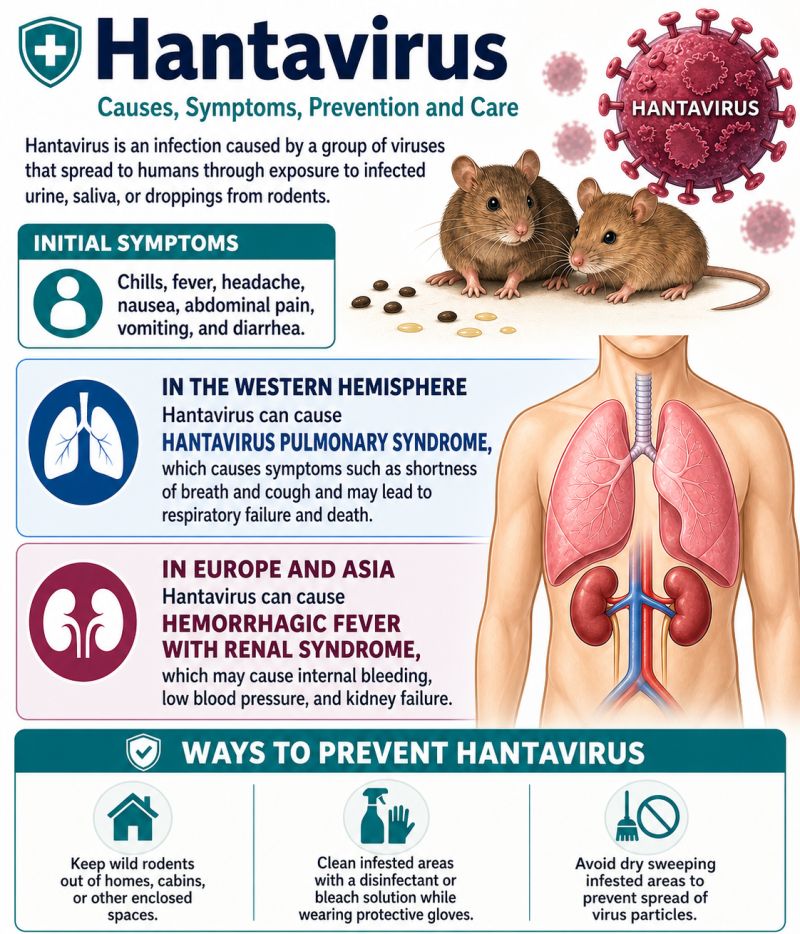
I usually spend my time focusing on code architecture and building systems that scale, but every now and then, I find myself diving down a rabbit hole of a different kind of system failure. Lately, the reports regarding the M.V. Hondius and the cluster of Hantavirus cases have been hard to ignore. It is a stark reminder that even in our highly controlled, modern environments, biological systems can still disrupt everything in ways we are not prepared for.
Most of the time, when we talk about outbreaks on cruise ships, we are looking at the predictable, if unpleasant, suspects like norovirus or E. coli. Those have patterns we understand well. But seeing Hantavirus in this context is different. It is a massive outlier. Hantavirus is typically a localized issue, usually linked to specific environments where rodent populations interact with human spaces. The mechanism of transmission—inhaling aerosolized particles from rodent urine, droppings, or saliva—is not how we typically expect an onboard outbreak to propagate.
From what I have been reading, this particular cluster involved the Andes virus, a New World strain. That detail is critical because the consequences of these strains are severe, often leading to pulmonary edema. Unlike the Old World strains that are more common in Asia and Europe and primarily target kidney function, the New World variants found in the Americas are significantly more dangerous. We are talking about mortality rates that can climb as high as 50 percent in some cases. That is a brutal statistic, and it changes the entire calculus of risk management.
What I find particularly concerning as a builder is the lack of a clear, standard transmission vector that we might expect in a contained environment like a ship. Hantavirus is not usually something you catch from a person sitting next to you. It is environmental. It is about how the virus exists in nature, hiding in rodents, and then enters our space when we disturb those environments. The fact that eight cases have surfaced, with some tragic fatalities and serious illness, suggests that the virus found a way into the ship's ecosystem, likely before it ever left port.
When I look at this, I see a lesson in complexity. We build software to be fault-tolerant and isolated, but biological systems are persistent and opportunistic. This outbreak is a signal for public health officials, but it is also a sober look at how quickly a system can go from functioning normally to a state of total lockdown. It is not just about the code; it is about recognizing the unexpected variables that can crash the entire operation.